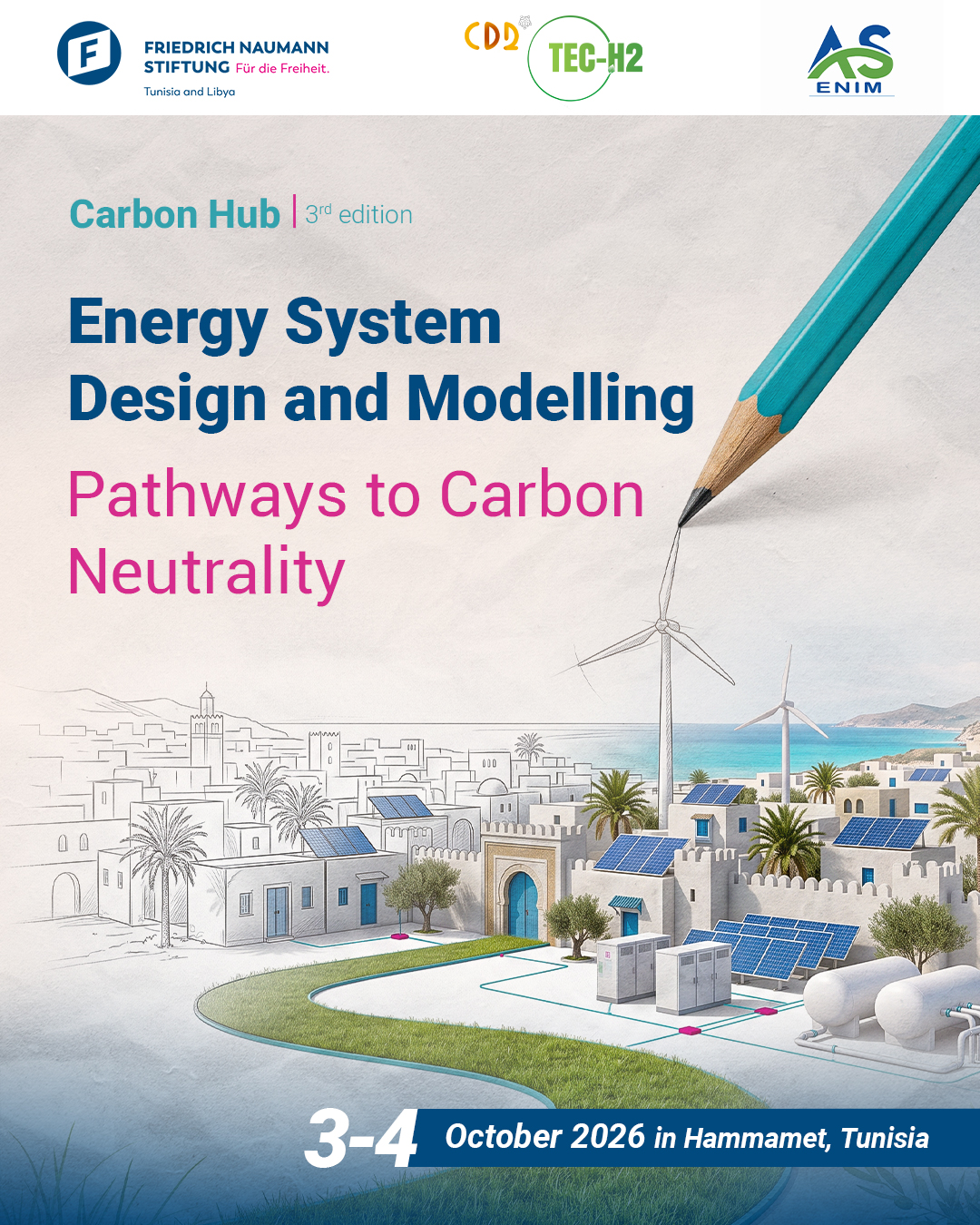
Context
Achieving carbon neutrality has become one of the defining challenges of the twenty-first century. Following the commitments of the Paris Agreement and the growing urgency to address climate change, countries worldwide are accelerating the transition towards sustainable, resilient, and low-carbon energy systems. This transition requires not only the large-scale deployment of renewable energy sources but also the integration of innovative technologies such as green hydrogen, energy storage, electrification of end-use sectors, smart grids, digitalization, and carbon-neutral industrial processes.
Designing future energy systems capable of meeting environmental, economic, and social objectives is an increasingly complex task. The rapid evolution of technologies, changing energy markets, and ambitious climate policies call for advanced planning and decision-support tools capable of evaluating multiple development pathways under uncertainty. In this context, energy system design and modelling have emerged as indispensable instruments for supporting evidence-based policymaking, optimizing investments, assessing technology portfolios, and identifying cost-effective strategies for achieving carbon neutrality.
These challenges are particularly relevant for North Africa and the Mediterranean region, where rapidly growing energy demand, abundant renewable energy resources, and increasing climate vulnerability create both significant opportunities and complex policy challenges. Countries in the region are uniquely positioned to accelerate the deployment of renewable energy, develop green hydrogen value chains, strengthen regional energy cooperation, and contribute to global decarbonization efforts while fostering sustainable economic development.
Tunisia is playing an increasingly active role in this transition by promoting renewable energy deployment, improving energy efficiency, and supporting research and innovation in sustainable energy systems. Owing to its strategic geographical position, exceptional solar and wind resources, and strong academic and research ecosystem, Tunisia has the potential to become a regional hub for clean energy innovation, energy system modelling, and green hydrogen development.
Building on the success of its previous editions, the 3rd Carbon Hub Workshop aims to provide an interdisciplinary platform where researchers, engineers, policymakers, industry representatives, and international organizations can exchange scientific knowledge, present innovative research, discuss emerging technologies, and strengthen international cooperation in support of carbon-neutral energy systems. The workshop also seeks to bridge the gap between scientific research and practical implementation by promoting dialogue between academia, industry, public institutions, and funding organizations.
The workshop is jointly organized by the TEC-H2 Research Consortium (CDR2024ES03), coordinated by the Laboratory for the Study of Thermal and Energy Systems (LESTE) at the National Engineering School of Monastir (ENIM), University of Monastir, in partnership with the Friedrich Naumann Foundation for Freedom (FNF) – Tunisia Office. Through this initiative, the organizers aim to strengthen scientific excellence, foster international collaboration, support capacity building for young researchers, and contribute to the development of innovative solutions for a sustainable, resilient, and carbon-neutral energy future.
Conference Topics
The conference welcomes original contributions addressing, but not limited to, the following topics:
- Pathways to Carbon Neutrality
- Low-Carbon Technologies
- Energy System Design
- Energy Modelling & Optimization
- Renewable Energy Integration
- Green Hydrogen and Power-to-X Systems
- Energy Storage Technologies
- Sustainable Mobility and Transport Electrification
- Smart Grids and Integrated Energy Systems
- Energy Policy, Economics & Sustainability
Key Dates
- Extended abstract submission Deadline: 15 September 2026
- Notification of Acceptance: 25 September 2026
- Conference dates: 3-4 October 2026
Keynote Speakers
- Prof. Dr.-Ing. Walter Théodore Czanetzki, Esslingen University of Applied Sciences, Germany.
- Prof. Dr.-Ing. Ertan Akgün, Technische Hochschule Ingolstadt (THI), Faculty M, Germany.
Program
The workshop program is avaible hereExtended absract submission
The template with the extended abstract (3 to 4 pages) writing guidelines is provided Here.
The authors will choose to propose their contribution for either an oral or a poster presentation. The scientific committee will then review the submission and, if selected, will confirm the final presentation format (oral or poster).
Please submit your extended abstract by email to : tec.h2@enim.u-monastir.tn
The submission deadline is set to 23 September 2026.Poster session: Please prepare your poster in format (60 x 90 cm). Authors need to be present at their respective posters for discussion with attendees during the session.
Registration
Registration fee :
The registration fee covers all conference materials and full-board accommodation.
Post-doc or Phd Student registration 600 TND : accommodation in a double room (shared with another participant) for one night (October 3rd).
Academic staff and Industrials 700 TND : accommodation in a single room for one night (October 3rd).
Payment Methods
Payment can be made using any of the following options:
Please make payment to the ENIM Scientific Association :
Bank: BIAT
Bank Address: BIAT Monastir (Place du leader, Monastir, Tunisia)
Account Name: ASSOCIATION SCIENTIFIQUE DE L'ENIM (ASENIM)
RIB: 08 503 00023 20 04655 9 02
IBAN: TN59
SWIFT Code: BIAT TNTT
Registre National des Entreprises (RNE): 1319413Q
AS-ENIM Address: National Engineering School of Monastir, Avenue Ibn El Jazzar, 5019 Monastir, Tunisia.
Venue
The workshop will take place at The Sindbad Hotel, Hammamet, Tunisia.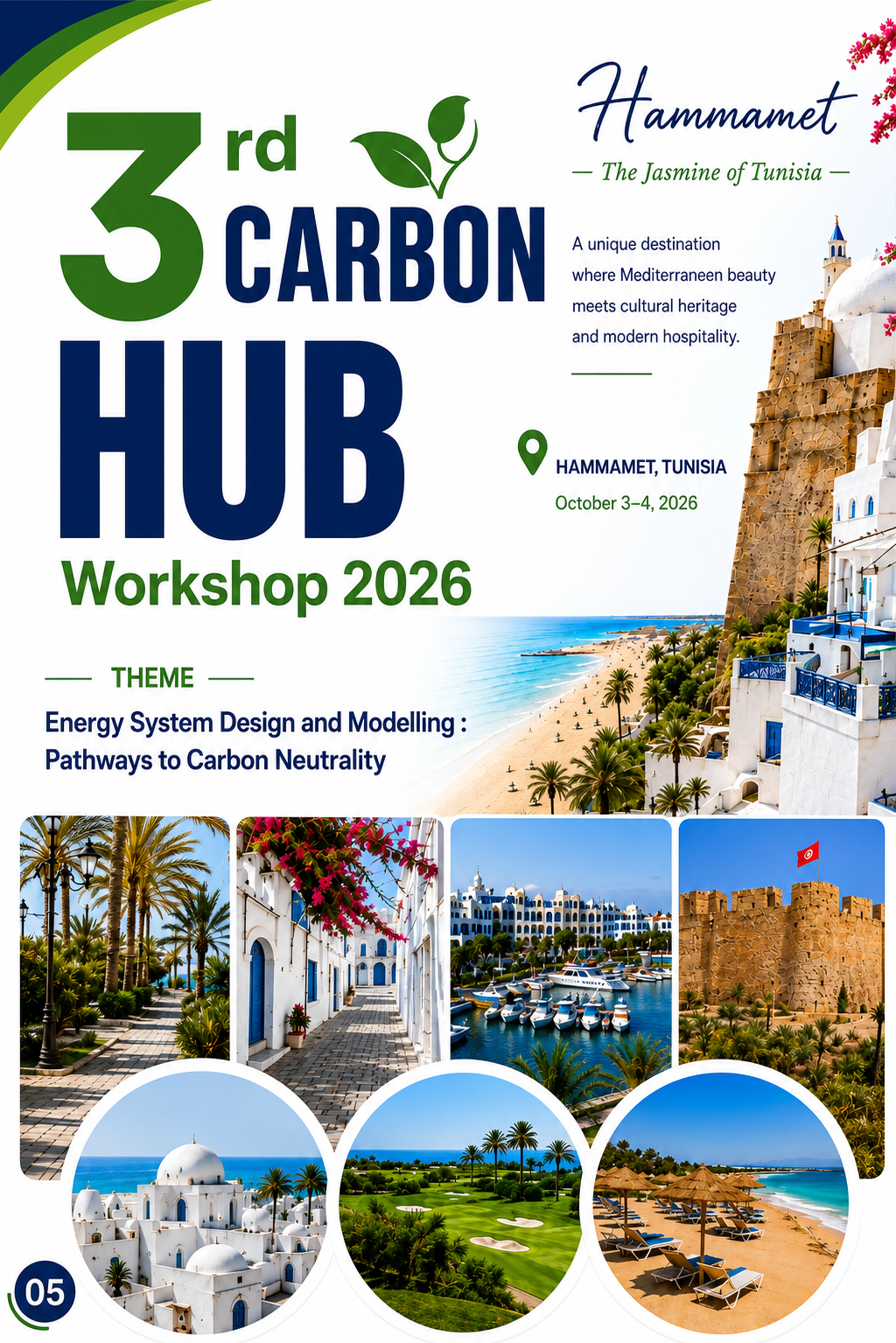
Hammamet
Contact
Email: tec.h2@enim.u-monastir.tn